How Many Shuffles Really Randomize a Deck of Cards
A celebrated result says seven shuffles are enough to mix a deck. It assumed a near-perfect technique. A newer proof asks what happens when the shuffling is as sloppy as it is at a real kitchen table.
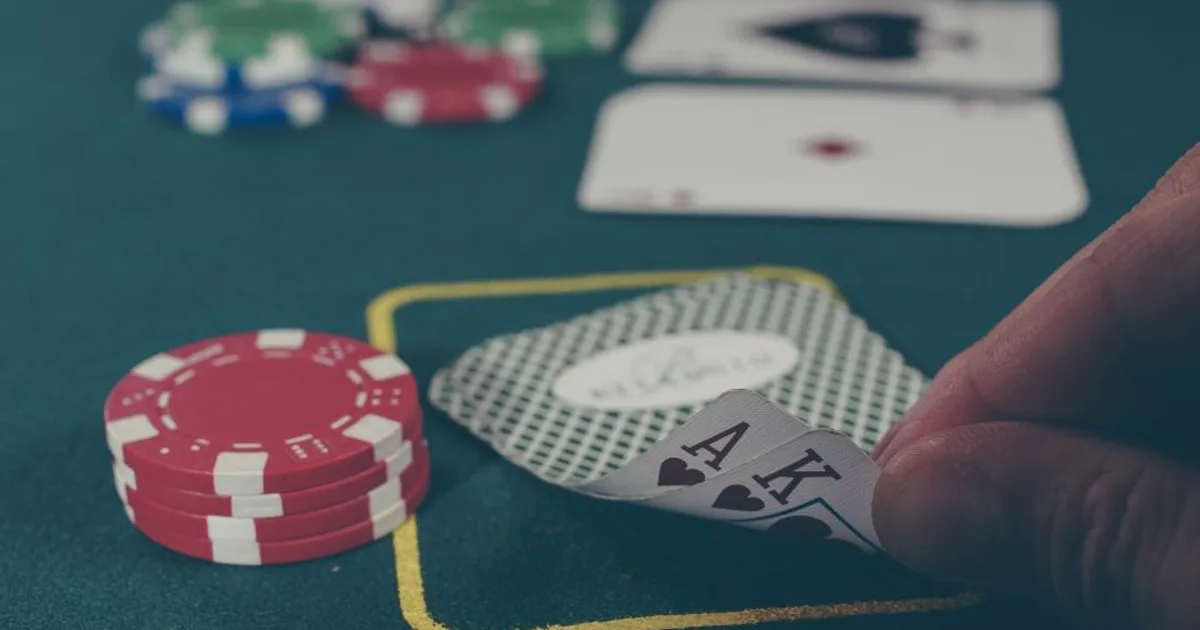
Few mathematical facts have escaped into ordinary conversation as cleanly as this one: it takes seven shuffles to randomize a deck of cards. The claim comes from a careful 1990s analysis by mathematicians studying the riffle shuffle, the motion in which you split the deck in two and let the halves cascade together. The result is genuine, and it is one of the nicer examples of a hard question given a crisp answer. It also carries a quiet assumption that a recent line of work has set out to remove.
To see the assumption, you have to be precise about what a shuffle is. In the standard mathematical model, you first cut the deck into two piles whose sizes follow a particular probability rule, then drop cards from the two piles in a way that depends on how many remain in each. That model is elegant and tractable. It is also tidier than what human hands do.
What "random enough" means
Before counting shuffles, mathematicians need a definition of done. A deck is not either ordered or random; it sits somewhere on a scale. The tool for measuring that distance is called total variation distance, which compares the actual spread of possible arrangements against a perfectly uniform one in which every ordering is equally likely. Seven shuffles is the point at which, under the classic model, that distance drops sharply toward zero. Before seven, traces of the original order remain detectable; after, they are gone for any practical purpose.
This sudden drop has a name, the cutoff phenomenon, and it appears across many random processes. For a long stretch nothing much seems to change, then over a narrow window the system tips from clearly structured to effectively random. The seven-shuffle figure is really a statement about where that window falls for fifty-two cards.
The trouble with real hands
Here is the catch the classic result quietly assumes. The clean model requires cutting the deck with something close to a magician's precision, splitting it into halves whose sizes obey the exact probability rule the proof needs. Most people do not cut that way. They grab a rough chunk, the split is lopsided, and the cascade is uneven. A newer proof, reported in Quanta Magazine, tackles exactly this: how many shuffles are needed when the cuts are sloppy, the way they are in life rather than in theory.
The achievement is partly technical. Removing the precise-cut assumption breaks the symmetry that made the original analysis manageable, so the new argument has to handle a far messier set of possibilities. The reassuring headline is that sloppy shuffling still works; it does not leave a deck stuck in some hidden pattern forever. The honest detail is that imperfection has a cost, and pinning down that cost is what the new mathematics is for.
Why a card-table question matters
It would be easy to file this under recreational mathematics, but the methods reach further. The same machinery that counts shuffles describes how quickly many random processes settle toward equilibrium, from algorithms that sample complex probability distributions to models of how information disperses through a network. A shuffle is just an unusually concrete example of a question that turns up wherever randomness is put to work. Getting the sloppy case right is, in that light, less about cards than about trusting the tools we lean on when the inputs are not clean. As we have noted in our look at counting fundamental particles, careful definitions are often where the real difficulty hides.
So the bumper-sticker version, seven shuffles, survives, with an asterisk worth keeping. Seven is the answer for an idealized shuffler. The rest of us, shuffling unevenly at the table, are now a little better understood, and may want to add a shuffle or two for good measure.
Cited Sources
- Levin, B. "Seven Perfect Shuffles Randomize a Deck of Cards. But How Many Sloppy Ones?" Quanta Magazine, 17 June 2026. quantamagazine.org
- Bayer, D., and Diaconis, P. "Trailing the Dovetail Shuffle to Its Lair." The Annals of Applied Probability, vol. 2, no. 2, 1992, pp. 294–313.
- Levin, D. A., Peres, Y., and Wilmer, E. L. Markov Chains and Mixing Times. 2nd ed., American Mathematical Society, 2017.